
Exporting led neon lights requires more than checking product appearance, brightness, and price. Different markets have different safety, environmental, and electromagnetic compatibility requirements. When the required certifications are missing, products may face customs delays, sales restrictions, project rejection, or additional testing costs after shipment.
Certification requirements usually happen because LED Neon Flex includes electrical components, low-voltage circuits, power supplies, housing materials, and waterproof structures. For the European market, CE and RoHS are commonly required. CE relates to safety, EMC, and compliance with EU directives, while RoHS restricts hazardous substances in electrical and electronic products. For the United States and Canada, UL, ETL, FCC, or CSA-related compliance may be requested depending on the product type and project requirements.
Outdoor LED neon lights also need reliable waterproof performance. According to IEC 60529, IP65 protects against dust and water jets, while IP67 provides stronger protection against temporary immersion under defined test conditions. For signage lighting and architectural lighting projects, IP rating is often checked together with electrical safety documentation.
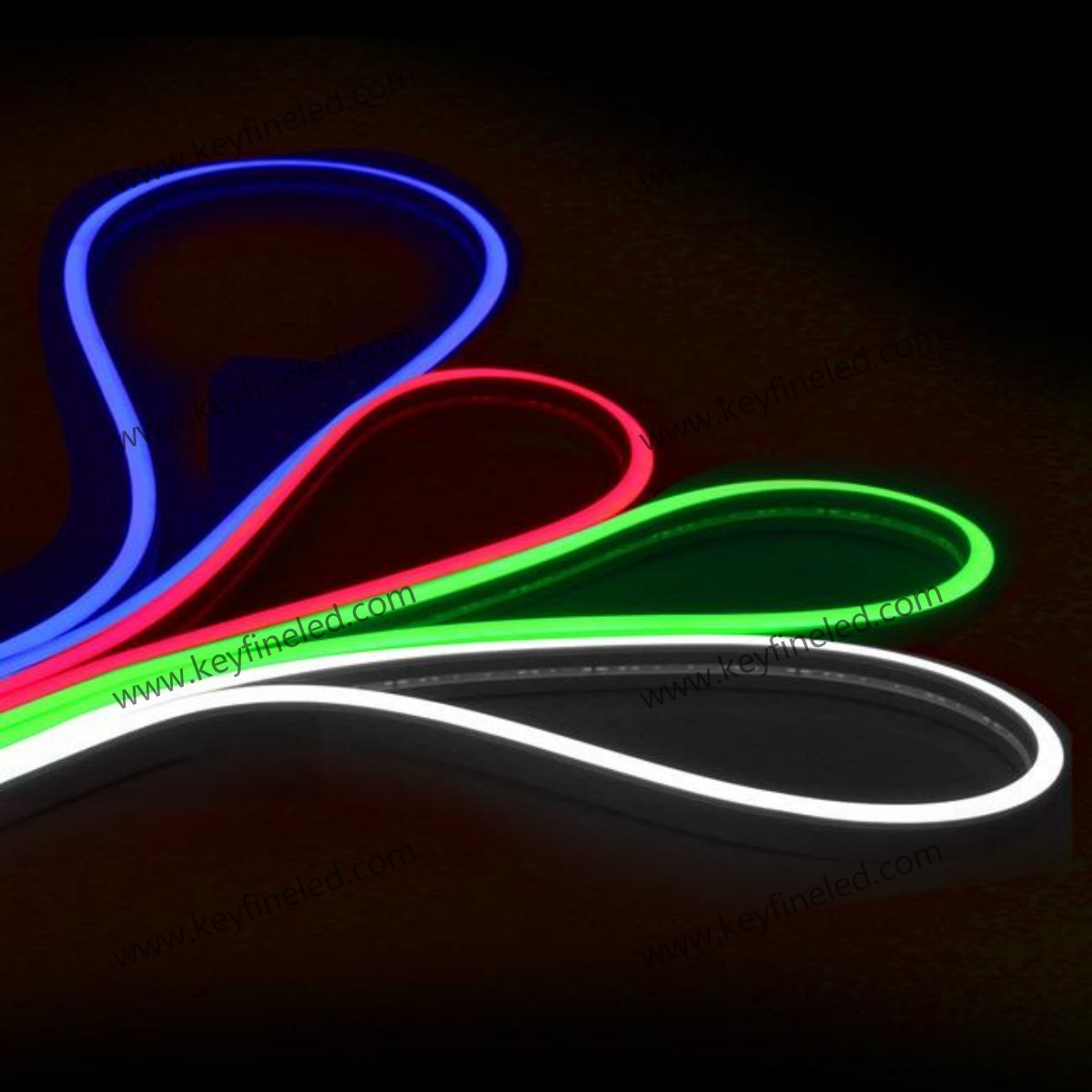
A reliable export solution should begin by confirming the target market before production. Certification needs are different for Europe, North America, the Middle East, Southeast Asia, and other regions. The same LED neon light may require different documents depending on whether it is used for indoor signage, outdoor facade lighting, retail decoration, or large commercial lighting projects.
For European orders, CE and RoHS are usually important. CE helps show that the product meets relevant EU safety and EMC requirements, while RoHS confirms control over restricted substances such as lead, mercury, cadmium, and certain flame retardants. For North American projects, UL or ETL listing is often requested for electrical safety, especially when products are used in commercial spaces or public installations.
Power supplies should also be checked carefully. Even if the LED neon flex body has compliance documents, an uncertified power supply can create project approval issues. For export orders, the full lighting system should be reviewed, including LED neon flex, connectors, cables, controllers, power supplies, and packaging labels.
Keyfine has nearly 20 years of LED lighting manufacturing experience, covering LED neon flex, led strip lights, rainbow tubes, and decorative lighting products. With integrated production and quality control, Keyfine supports export-oriented projects through product selection, specification matching, stable batch supply, and compliance-focused production support.
The first step is to identify the destination market. For Europe, confirm CE, RoHS, and related EMC requirements. For the United States and Canada, check whether UL, ETL, FCC, or CSA-related documentation is required. For outdoor projects, confirm waterproof rating based on the installation environment.
The second step is to define the application. Indoor decorative lighting usually has simpler requirements than outdoor signage or commercial facade lighting. Large public projects may require stronger safety documentation, flame-retardant materials, and more detailed technical files.
The third step is to check whether the certification covers the exact product model. Certification documents should match voltage, product type, material, structure, and power supply. Using a similar document for a different product may create risk during inspection or project approval.
Certification | Common Purpose | Typical Export Use
CE | EU safety and EMC compliance | European market
RoHS | Restricted substance control | European and global buyers
UL or ETL | Electrical safety evaluation | North American projects
FCC | Electromagnetic emission control | Products with electronic control
IP65 or IP67 | Dust and water protection | Outdoor LED neon lights
Keyfine can provide LED neon lights for commercial lighting, signage lighting, architectural lighting, and outdoor decoration. For OEM/ODM and wholesale supply, voltage, waterproof rating, color temperature, bending type, cutting length, packaging, and compliance requirements can be discussed before production to reduce export risk.
LED neon lights for export should be selected according to market requirements, application environment, and project approval standards. CE, RoHS, UL, ETL, FCC, and IP ratings are commonly considered, but the exact documents depend on destination market and product use.
A successful export order should review the full lighting system, not only the neon body. Power supplies, controllers, connectors, cables, labels, and packaging should also match the project requirements. Keyfine supports export LED neon flex projects with manufacturing experience, customization capability, and stable supply for large-scale orders.