
The difference between 12V and 24V led neon lights becomes clear when installation length and system stability are considered. Both are low-voltage LED Neon Flex solutions, widely used in signage lighting, decorative lighting, and architectural lighting. However, they behave differently when applied to larger lighting systems.
Voltage drop is the main reason this difference matters. When current flows through a long LED neon light circuit, resistance in the wire reduces the voltage along the line. In a 12V system, the current is higher under the same power level, which increases energy loss. According to basic electrical calculation, power loss is proportional to the square of current, which means higher current results in more energy loss and heat. This leads to brightness reduction at the end of the strip and uneven lighting performance.
In contrast, a 24V LED neon light system uses lower current for the same wattage. This helps maintain more consistent brightness across longer runs. For commercial lighting projects, where long linear lighting is required, brightness consistency is critical for visual quality and brand presentation.
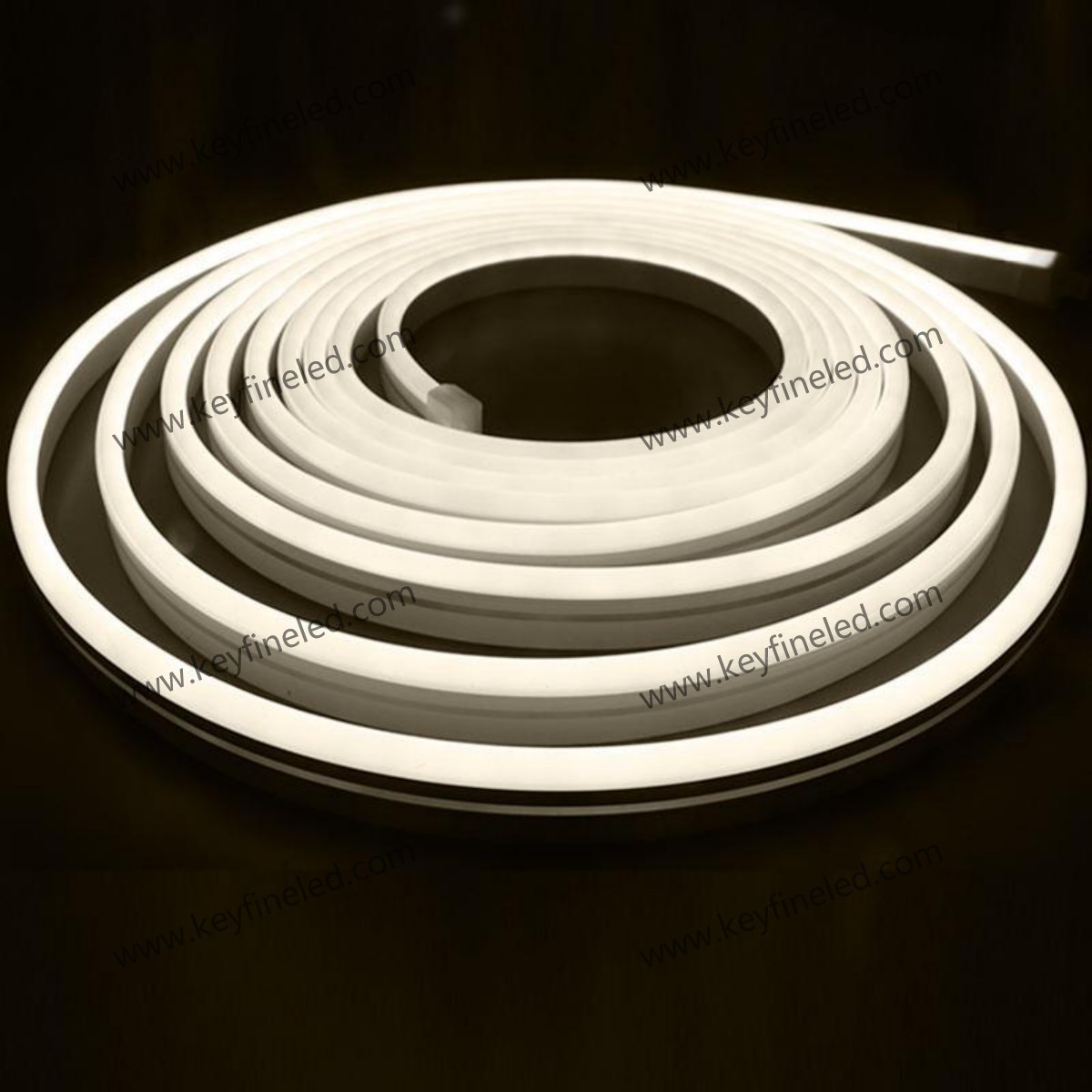
Selecting between 12V and 24V LED neon lights depends on project size and performance requirements. For small installations such as indoor signage, display cabinets, and short decorative lines, 12V LED neon flex offers flexibility and easier cutting intervals. It allows precise customization for compact designs.
For larger commercial lighting systems, 24V LED neon flex provides a more reliable solution. It supports longer continuous runs with reduced voltage drop, making it suitable for building outlines, retail lighting, facade lighting, and large signage applications. Many lighting engineers recommend using 24V systems for installations exceeding standard short distances to improve stability and reduce maintenance frequency.
Power supply design also plays a critical role. Industry practice shows that operating power supplies at around 70 to 80 percent of their rated capacity improves performance stability and extends system lifespan. Proper wiring layout, power injection points, and load distribution further enhance system efficiency.
Keyfine has nearly 20 years of manufacturing experience in LED neon flex and decorative lighting. With integrated design, production, and quality control capabilities, Keyfine ensures stable voltage performance, consistent brightness, and reliable batch production for large-scale projects. The company supports customized solutions based on voltage, waterproof requirements, and installation needs.
The first step is to evaluate installation length. For short indoor runs under limited distance, 12V LED neon lights can provide sufficient performance. For longer installations in commercial lighting projects, 24V LED neon lights are more suitable because they maintain brightness consistency and reduce voltage drop.
The second step is to consider the application environment. Indoor decorative lighting focuses on flexibility and precision, while outdoor signage lighting and architectural lighting require stable performance and often involve longer runs. In these cases, 24V systems combined with waterproof LED neon flex improve reliability.
The third step is to analyze lighting design requirements. Single-color LED neon light is easier to manage for long runs, while RGB lighting systems require careful controller and power planning. For large projects, selecting the correct voltage simplifies system design and reduces wiring complexity.
Selection Factor | 12V LED Neon Lights | 24V LED Neon Lights
Installation Length | Short runs | Medium to long runs
Brightness Stability | Suitable for small areas | Better for large-scale projects
Application | Indoor decorative lighting | Commercial and architectural lighting
Power Efficiency | Higher current loss | Lower current, improved efficiency
System Complexity | Simple setup | Requires planning but more stable
Keyfine provides LED neon flex solutions for commercial lighting, signage lighting, and architectural lighting applications. With OEM and ODM support, specifications such as voltage, waterproof level, cutting length, and color options can be customized to match project requirements, ensuring consistent quality in bulk supply.
The difference between 12V and 24V LED neon lights lies in current, voltage stability, and application scale. 12V LED neon flex is suitable for short, detailed installations where flexibility is important. 24V LED neon light is the preferred option for larger projects due to its ability to reduce voltage drop and maintain consistent brightness over long distances.
A well-designed lighting system requires correct voltage selection, proper power planning, and reliable product quality. Keyfine supports large-scale LED neon flex projects with stable manufacturing capability, consistent product performance, and customized solutions tailored to commercial lighting needs.