Choosing led neon flex for outdoor use requires more technical consideration than indoor lighting. Outdoor environments expose lighting products to rain, dust, ultraviolet radiation, temperature fluctuation, and continuous operation. When the wrong LED Neon Flex is selected, common issues include water penetration, brightness decay, color inconsistency, cracking housing, and shortened lifespan.
Waterproof performance is the first major challenge. According to IEC 60529 standards, IP65 protects against water jets and dust ingress, while IP67 provides protection against temporary immersion. In outdoor signage lighting, architectural lighting, and landscape lighting projects, improper waterproof selection often leads to early product failure. Many project maintenance reports show that insufficient sealing at connectors and end caps is one of the leading causes of outdoor lighting damage.
Another common problem is voltage drop in long installations. When LED neon flex is used across extended distances, the voltage at the end of the strip may decrease, causing uneven brightness. Electrical engineering data shows that higher voltage systems reduce current under the same power load, which improves stability across long runs. This is why 24V LED neon flex is widely used in large outdoor lighting projects.
A reliable outdoor lighting solution starts with correct product specification and system planning. Waterproof rating should match the actual exposure environment. For semi-outdoor areas such as covered entrances, IP65 LED neon flex can provide sufficient protection. For fully exposed environments such as building facades and outdoor signage, IP67 waterproof LED neon flex is a more stable solution.
Material selection also plays a critical role. High-quality silicone housing provides better UV resistance, flexibility, and durability compared to lower-grade PVC materials. In outdoor environments, prolonged exposure to sunlight can degrade materials, leading to discoloration and brittleness. Industry material testing shows that UV-resistant silicone can maintain structural integrity and light transmission performance for longer periods under continuous outdoor exposure.
Power system design is another essential factor. Large outdoor installations require proper calculation of total wattage, power supply capacity, and cable length. It is widely accepted in lighting engineering that power supplies should operate below full capacity to ensure stable performance and reduce thermal stress. A common practice is to keep load levels around 80 percent of rated capacity.
With nearly 20 years of manufacturing experience, Keyfine integrates design, production, and quality control to support outdoor LED neon flex projects. The company provides stable product performance, consistent batch quality, and customization options for large-scale applications, helping ensure reliable installation and long-term use.
The first step in choosing LED neon flex is to define the application scenario. Outdoor Led Neon Light used for signage lighting requires clear brightness and consistent color, while architectural lighting projects often require long continuous lines and uniform illumination. Landscape lighting may require additional flexibility and waterproof protection.
The second step is selecting the correct voltage. For short installations, 12V LED neon flex may be sufficient. For long-distance outdoor lighting, 24V LED neon flex is more suitable because it reduces voltage drop and maintains consistent brightness across the entire installation.
The third step is choosing the appropriate bending type. Top-bend LED neon flex is suitable for straight outlines and signage, while side-bend LED neon flex is better for curved designs and complex shapes. Selecting the correct bending direction improves installation efficiency and final visual performance.
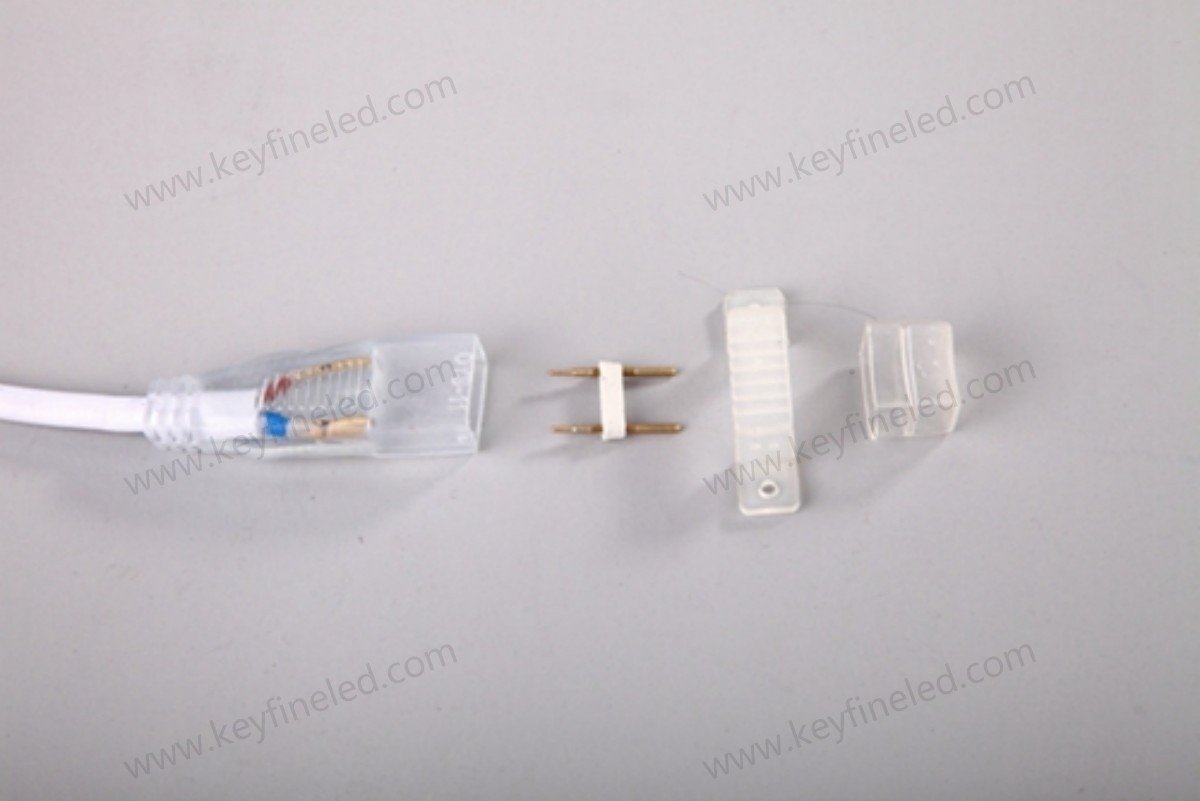
The fourth step is confirming waterproof structure and connection details. Outdoor LED neon flex should include sealed connectors, reliable end caps, and proper cable protection. These components are critical to maintaining waterproof integrity during long-term outdoor use.
Selection Factor | Recommended Option For Outdoor Projects
Waterproof Rating | IP65 for covered areas, IP67 for exposed outdoor use
Voltage | 24V LED neon flex for long installations
Material | UV-resistant silicone housing
Bending Type | Top-bend for signage, side-bend for curved applications
Power Supply | Maintain safe load margin for stability
Keyfine provides LED neon flex solutions for outdoor LED neon light applications including signage lighting, architectural lighting, and commercial lighting. With OEM and ODM support, specifications such as voltage, color temperature, waterproof level, and cutting length can be customized to meet project requirements, ensuring consistent quality in bulk supply.
Selecting the right LED neon flex for outdoor use requires a balance between waterproof protection, voltage stability, material durability, and application requirements. IP67 waterproof LED neon flex combined with 24V systems is commonly used in large outdoor lighting projects to ensure consistent performance and long service life.
A well-planned lighting system improves installation efficiency, reduces maintenance cost, and ensures visual consistency across the project. Keyfine supports outdoor lighting applications with stable manufacturing capability, quality control, and customized production solutions designed for large-scale projects.